10 Fascinating Royal Navy Facts
1. The Navy's Secret Teetotal Experiment
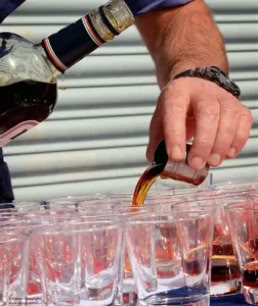
In 1970, HMS Fife became the first Royal Navy ship to go completely alcohol-free as an experiment. The crew was compensated with extra pay instead of their daily rum ration. The experiment was deemed successful, but tradition won out and the ship returned to serving rum until Black Tot Day ended the practice navy-wide in 1970.
2. Nelson's Body Was Preserved in Brandy, Not Rum
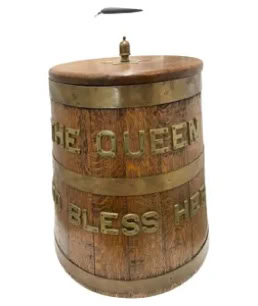
Contrary to popular belief, Admiral Nelson's body wasn't preserved in rum for the journey home after Trafalgar. It was actually stored in a lead-lined coffin filled with brandy and camphor. The "Nelson's Blood" rum legend arose because sailors often received a rum ration, but Nelson himself was preserved in the more refined spirit.
3. The Royal Navy Once Captured an Entire Dutch Fleet While on Ice
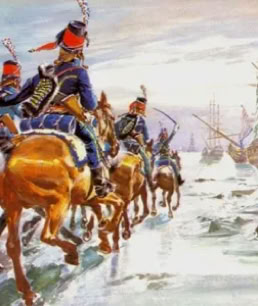
During the winter of 1795, British cavalry and infantry literally rode across the frozen Zuiderzee and captured the entire Dutch fleet trapped in ice near Den Helder. This remains the only recorded instance in history of cavalry capturing a fleet of warships, as the ships were completely immobilized by ice.

4. HMS Victory Is Still a Commissioned Ship
HMS Victory, Nelson's flagship at Trafalgar, is still technically in active service as the flagship of the Second Sea Lord. Launched in 1765, she's the world's oldest naval vessel still in commission, making her over 250 years old and still officially part of the Royal Navy's active fleet.
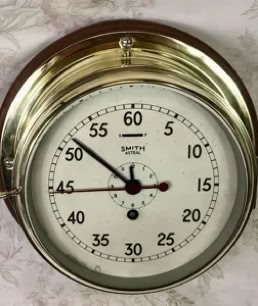
5. The Navy Had Its Own Time Zone
Until 1805, the Royal Navy used its own unique timekeeping system where the day began at noon rather than midnight. This "nautical day" prevented confusion during night watches and meant that a single night watch wouldn't be split across two calendar days. The practice was eventually abandoned for standardization.
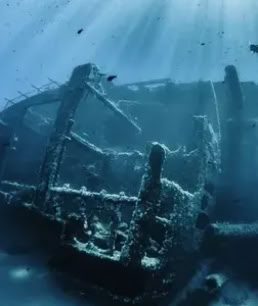
6. The Mysterious Case of the Vanishing Squadron
In 1707, an entire British squadron of four ships disappeared without a trace in the Mediterranean. HMS Association and three other vessels vanished with nearly 2,000 men aboard. The wreck wasn't discovered until 1967, revealing they had struck the Isles of Scilly in fog—one of naval history's greatest mysteries finally solved.
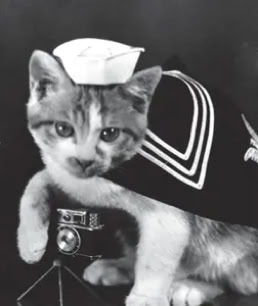
7. The Navy's Cat Problem Solution
Ships' cats were so important for controlling rats that the Royal Navy officially recognized them in regulations. Each cat received a daily ration and was listed in the ship's books. Some cats even received campaign medals. The practice continued well into the 20th century, with some World War II ships carrying multiple official feline crew members.
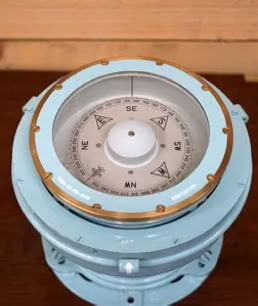
8. The Great Compass Conspiracy
For over 200 years, the Royal Navy unknowingly used faulty compasses due to a manufacturing error that went undetected. The Admiralty's compass makers had been installing iron fittings too close to the compass, causing systematic deviation. This wasn't discovered and corrected until the 1860s, affecting navigation throughout the Age of Sail.
9. The Navy's Secret Longitude Prize Winner
While John Harrison is famous for solving the longitude problem, the Royal Navy secretly tested and used his chronometers for decades before officially acknowledging them. Captain James Cook used Harrison's H4 chronometer copy on his second voyage, but the Admiralty kept this success quiet to avoid paying Harrison his prize money immediately.

10. The Navy's First Computer Was Made of Wood
The Royal Navy's first "computer" was the Admiralty Fire Control Table, a mechanical analog computer made entirely of wood and brass, used for calculating firing solutions. Developed in the 1910s, these wooden computers were incredibly accurate and continued to be used alongside electronic computers well into the 1970s on some vessels.
Links to our Friends